Blog
5 Workplace Safety Technologies Transforming Manufacturing in 2027
By NAVA Software· September 9, 2026· 8 min read
Summarize this post with

Loading insights...
LoadingSummarize this post with
Manufacturing floors have always carried risk. Heavy machinery, repetitive strain, and hazardous materials are constant hazards. Split-second decisions can turn a routine shift into a serious incident.
In 2027, workplace safety is no longer just about compliance checklists and reactive protocols; it's being reshaped by real-time data, AI-driven prediction, and smart systems that catch hazards before they become accidents.
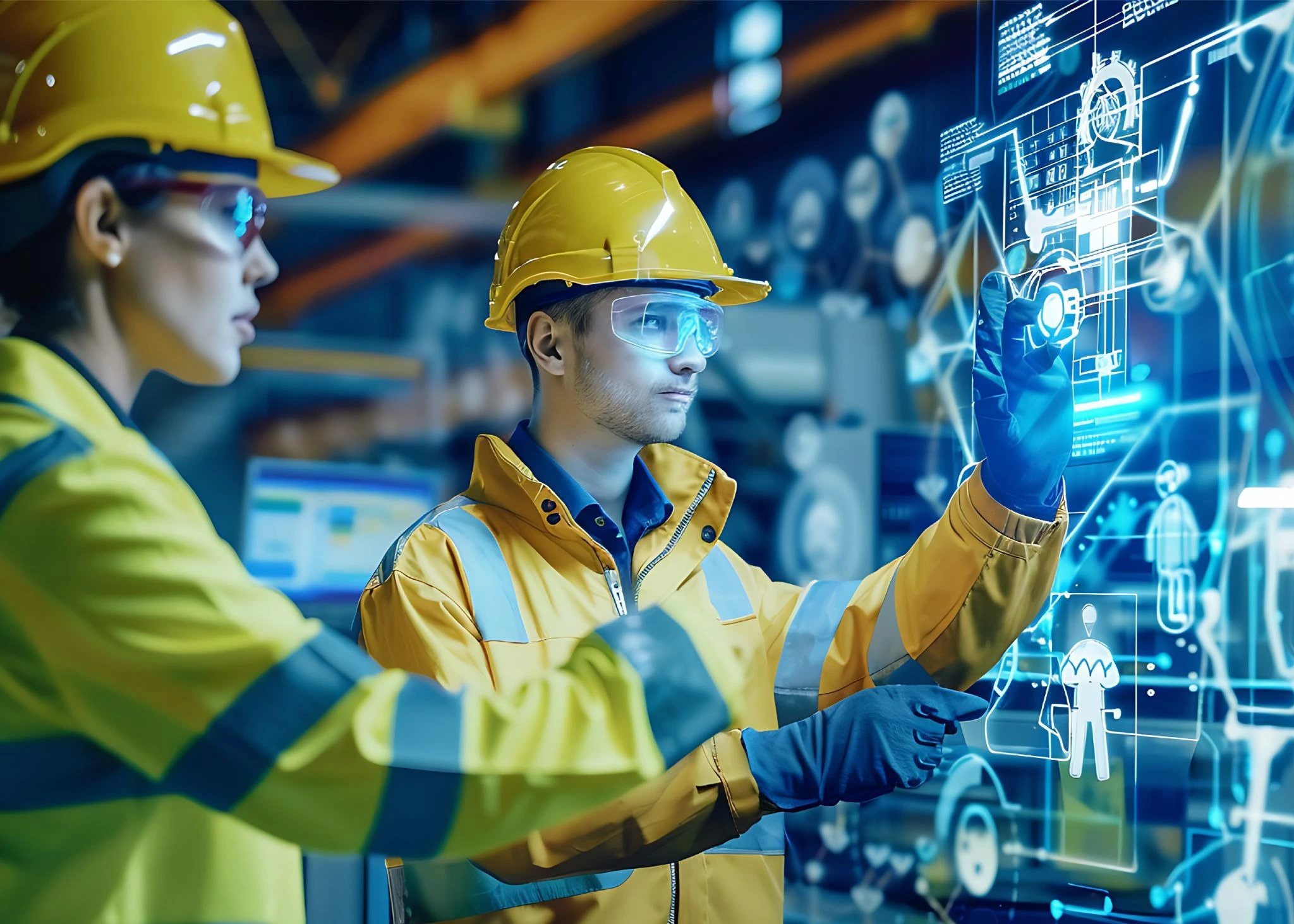
From wearable sensors that monitor worker fatigue to computer vision systems that flag safety risks in real time, manufacturers now have tools to catch hazards before they escalate.
A new generation of safety technology is helping manufacturers move from reacting to incidents to preventing them altogether.
The result isn't just fewer injuries; it's lower insurance costs, better regulatory standing, and a workforce that trusts the environment they show up to every day.
Computer vision AI is the most significant of all these technological advancements, a category of technology that turns the cameras factories already have into a continuous, always-on safety layer.
Below, we compare the leading technologies in this space before looking at where AI-driven safety technology is headed next.
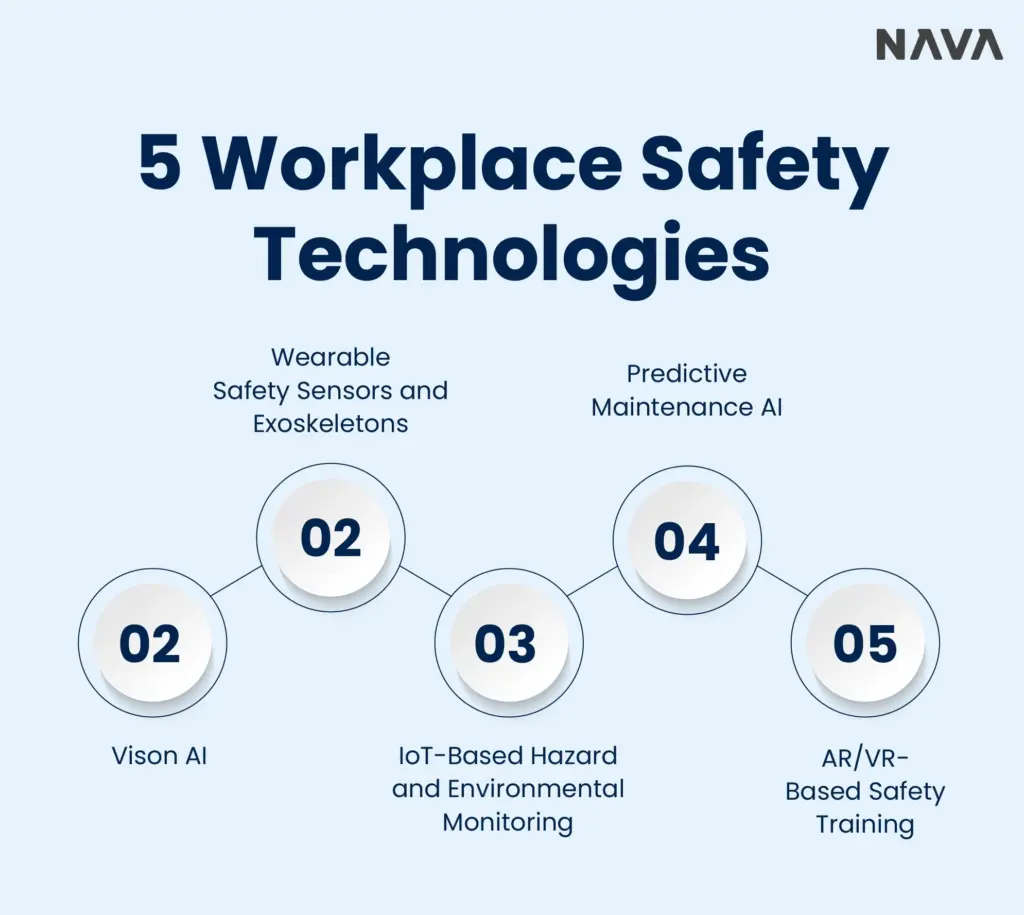
| Technology | Primary Function | Best For |
| Vision AI | Real-time detection of safety risks, unsafe proximity, zone breaches, and more | Facilities with existing camera infrastructure |
| Wearable Safety Sensors & Exoskeletons | Body-worn monitoring for fatigue, falls, and physical strain | Frontline workers on physically demanding lines |
| IoT-Based Hazard Monitoring | Fixed sensors tracking gas, temperature, air quality, and vibration | Facilities with chemical, thermal, or air-quality risks |
| Predictive Maintenance AI | ML-driven failure prediction for equipment | Plants with aging or high-value machinery |
| AR/VR-Based Safety Training | Immersive, risk-free hazard simulation | Onboarding and high-risk scenario training |
What it is:
Vision AI is quickly becoming the backbone of modern industrial safety programs, not just another monitoring tool, but a system that turns every existing camera into a continuous safety observer. Unlike manual walkthroughs or periodic audits, it never blinks, never takes a break, and never misses a shift change.
How it works:
Why it matters:
Beyond the production floor: Vision AI as a full safety layer
Modern Vision AI platforms are typically built as modular systems, so safety coverage extends wherever cameras already exist:
Platforms like NAVA Vision AI are built specifically around this retrofit-first, modular approach, deploying across safety, dock, yard, and site-access use cases on cameras a facility already has, rather than requiring a new hardware rollout for each area.
Key Capabilities
| Capability | Description |
| Yard & Dock Visibility | Tracks vehicle and trailer movement to reduce yard congestion and dock-area collision risk |
| Proximity Alerts | Flags workers entering unsafe distances from moving equipment |
| Restricted Zone Monitoring | Detects unauthorized entry into hazardous or high-risk areas |
| Real-Time Alert Routing | Sends instant notifications to supervisors or safety teams |
| Historical Analytics | Tracks violation trends over time by shift, zone, or worker group |
Unlike vision systems, which monitor fixed zones, wearables travel with the worker.
What it is
Exoskeletons:
Key Capabilities
| Capability | Description |
| Fatigue Monitoring | Tracks biometric signals to flag overexertion risk |
| Fall Detection | Sends automatic alerts if a worker falls or stops moving |
| Geofencing | Alerts workers and supervisors when entering restricted zones |
| Load Support (Exoskeletons) | Reduces physical strain on back, shoulders, and joints |
While wearables monitor people, IoT sensors monitor the environment itself.
Why it matters:
Fixed sensors reduce reliance on periodic workplace safety inspection checklists alone, catching hazards that build up between scheduled walkthroughs.
Key Capabilities
| Capability | Description |
| Gas Detection | Monitors for hazardous gas leaks in real time |
| Temperature Monitoring | Flags abnormal heat buildup in equipment or storage areas |
| Air Quality Sensors | Tracks particulate matter and ventilation effectiveness |
| Vibration Analysis | Detects early signs of mechanical instability |
Equipment failure is not just a downtime problem. A malfunctioning machine is also an injury risk.
Why it matters for safety, not just uptime:
Key Capabilities
| Capability | Description |
| Anomaly Detection | Identifies early signs of equipment degradation |
| Failure Prediction | Forecasts likely failure windows using historical and live data |
| Maintenance Scheduling | Recommends optimal service timing to avoid unplanned stops |
| Integration with CMMS | Connects with maintenance management systems for streamlined workflows |
Traditional classroom or video-based training struggles to replicate real hazard conditions. AR and VR close that gap safely.
What it is:
How it works:
Key Capabilities
| Capability | Description |
| Hazard Simulation | Recreates dangerous scenarios in a controlled, risk-free environment |
| Repeatable Practice | Lets workers rehearse emergency response as many times as needed |
| Progress Tracking | Measures individual performance and readiness |
| Scenario Customization | Tailors simulations to specific equipment, roles, or facility layouts |
The common thread across all 5 technologies is the same: manufacturing safety is shifting from documenting what already went wrong to preventing it in the first place.
Facilities that combine AI-powered video analytics, environmental monitoring, predictive maintenance, and immersive training are not just reducing incidents.
They are building a safety program that gets ahead of risk instead of chasing it. The first step is knowing what your floor is missing, and that's exactly where NAVA Vision AI comes in.
Ready to see where your facility stands? Contact NAVA Vision AI today to learn how Vision AI can strengthen your safety program from the ground up.